

























With just a few simple prompts, AI can spin up an entire authentication system, write API endpoints, or even configure a complete backend in a matter of minutes. At first glance, the code generated by Large Language Models (LLMs) looks absolutely perfect: neatly indented, fully compliant with syntax standards, and even loaded with professional comments explaining the logic.
However, behind this “slick” and secure-looking facade, AI-generated systems can easily become a ticking security time bomb. Why does this paradox exist?
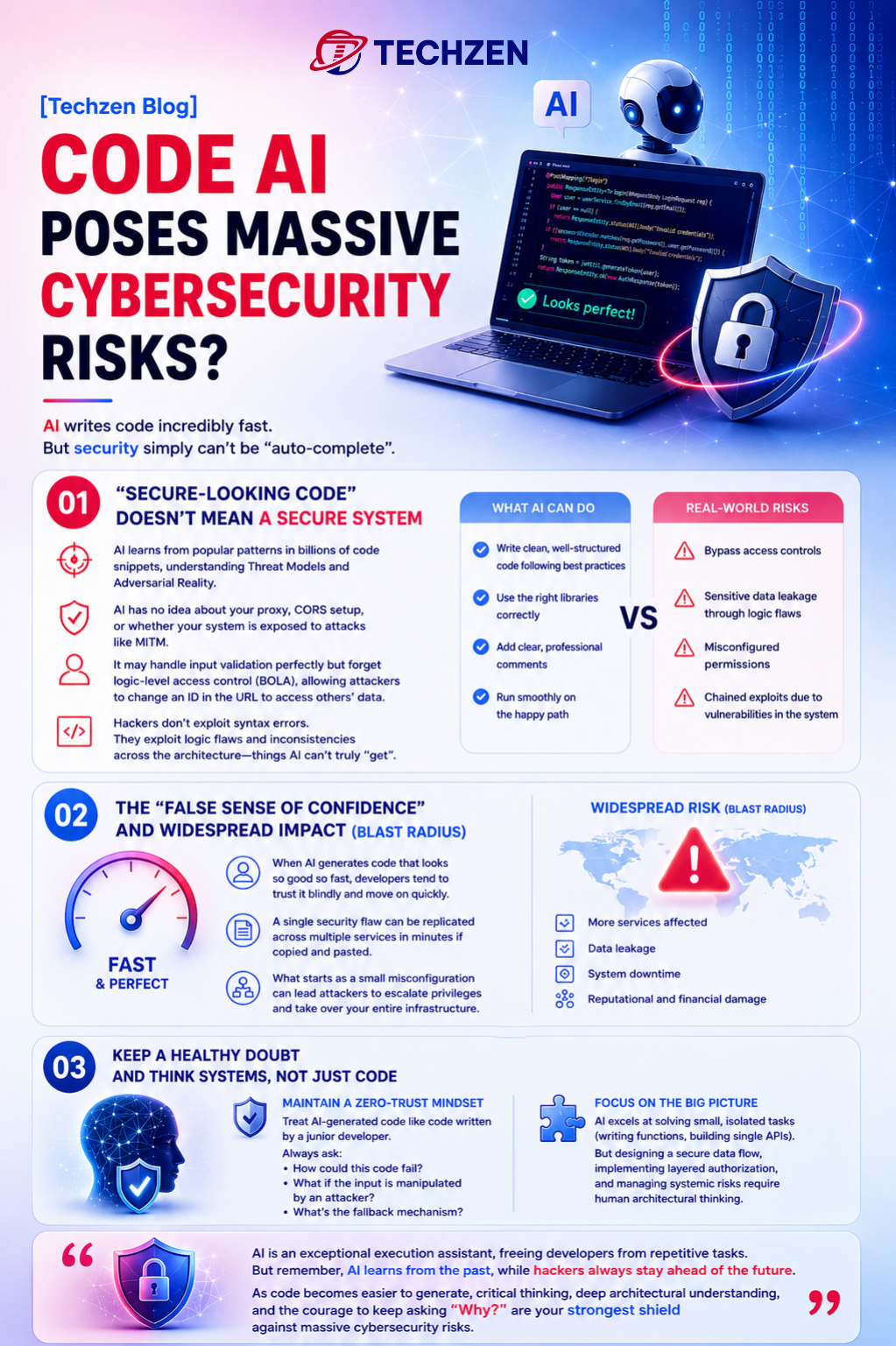
“Secure-Looking Code” Does Not Equal a “Secure System”
AI operates by recognizing common patterns from billions of lines of open-source code across the Internet. It knows exactly how to write a snippet to hash passwords using bcrypt or how to configure JWT tokens strictly by the textbook.
Yet, AI remains completely blind to real-world Threat Models and the Adversarial Reality.
- AI doesn’t know if your system sits behind a specific proxy, how your CORS is configured, or whether that particular data flow is vulnerable to a Man-in-the-Middle (MITM) attack.
- It can write a flawless input-handling function but entirely miss logic-level authorization checks (Broken Object Level Authorization – BOLA), allowing an attacker to view another user’s data simply by tweaking an ID in the URL.
Hackers don’t attack syntax errors. They exploit logical vulnerabilities and structural gaps among architectural components things AI has never truly “understood.”
“The Confidence Trap” and Its Massive Blast Radius
When developers see code that is generated so rapidly and beautifully by AI, it is easy to fall into complacency. We tend to skim through it, see that it works in the ideal scenario (the happy path), and immediately approve and merge it into the main branch.
This blind trust triggers a severe consequence: security vulnerabilities are duplicated at an alarming speed.
If an AI suggests a loose security configuration (for instance, granting overly broad permissions in a Cloud IAM configuration file or using an outdated encryption algorithm) and developers blindly copy-paste it across dozens of different microservices, the Blast Radius when an attack hits will be catastrophic. From a single minor configuration oversight, an attacker can escalate privileges and seize control of the entire enterprise infrastructure.
Retain Your “Skepticism” and Elevate System Thinking
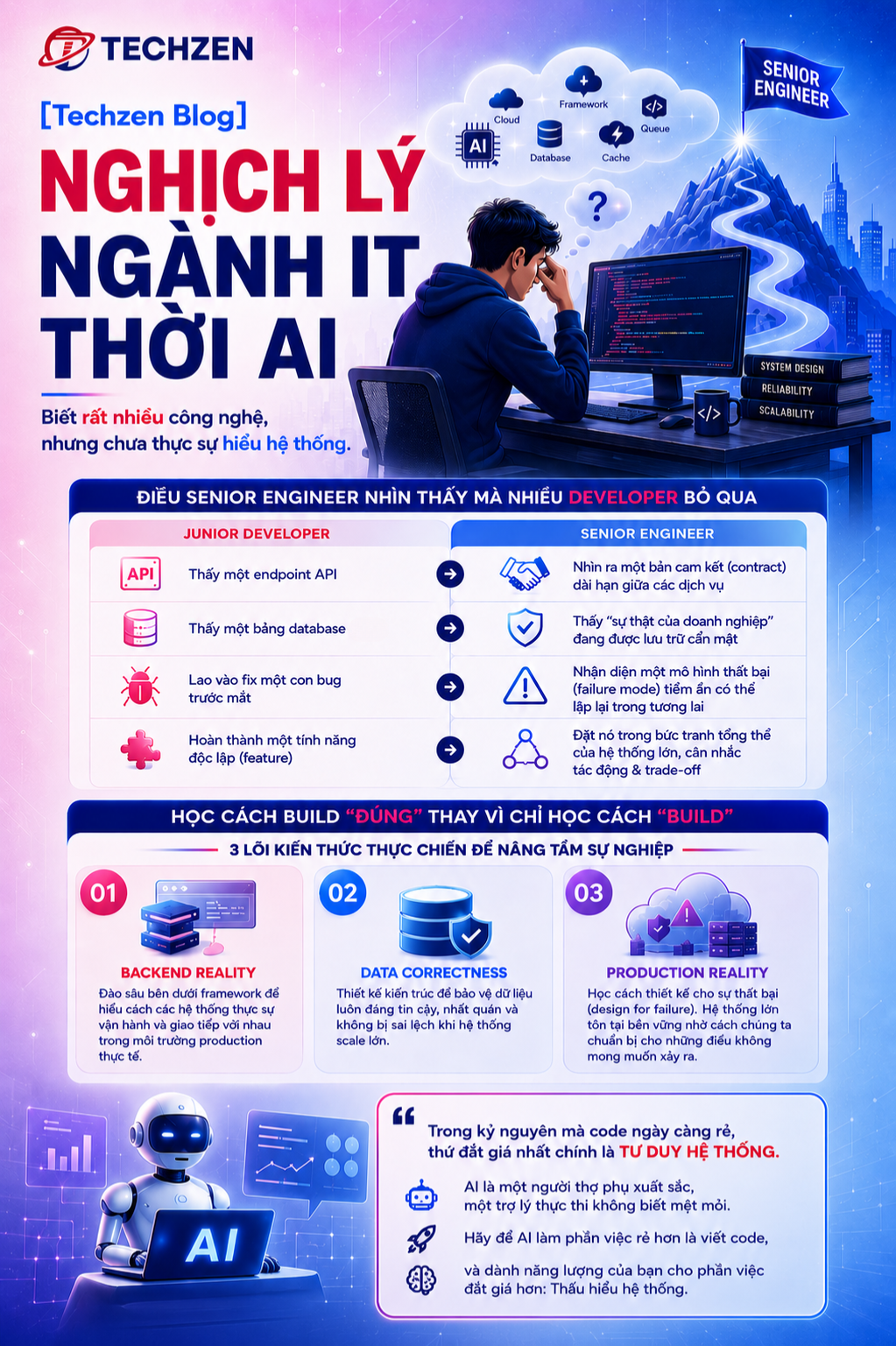
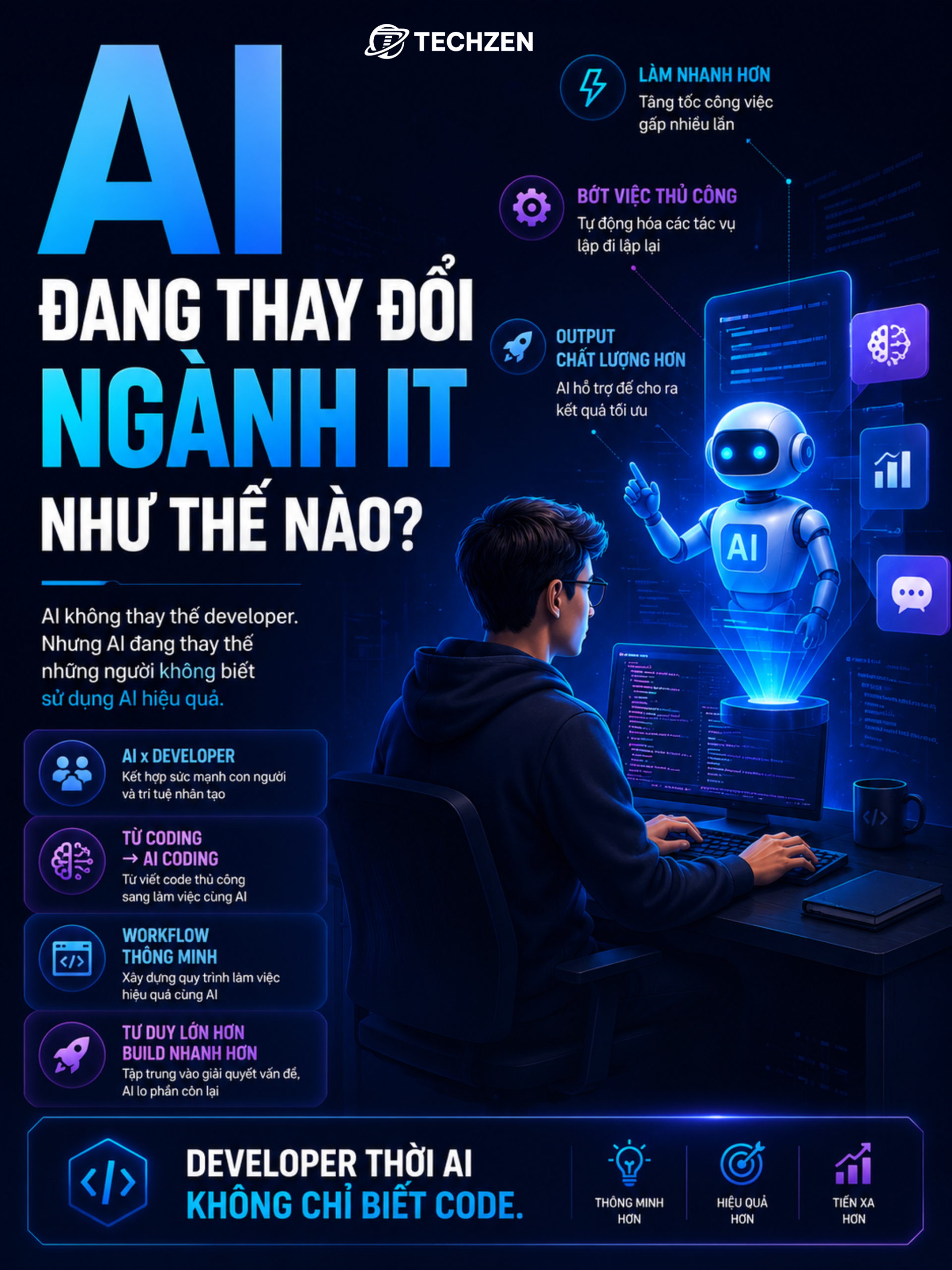
The AI era does not diminish the role of engineers; on the contrary, it demands that they shift from being a “code typist” to an “architectural auditor.”
To protect systems from the hidden risks of AI, a modern developer’s mindset must be shaped by two essential factors:
- Maintain a Zero Trust Mindset: Treat AI-generated code exactly like code submitted by a junior intern. Always ask: How will this code fail? If the input is manipulated by a hacker, will the system crash? What is the fallback mechanism here?
- Focus on the Grand Blueprint: AI excels at solving isolated, localized problems (writing specific functions or standalone APIs). However, stitching those APIs together into a secure data pipeline, designing multi-layered authorization mechanisms, and managing systemic risk still strictly require human intelligence.
Conclusion
AI is an exceptional execution assistant that frees developers from repetitive, boilerplate tasks. But remember: AI only learns from the past, whereas hackers always find ways to outrun the future.
As code production becomes effortless, your critical thinking, deep understanding of architecture, and a cool head that constantly asks “Why?” will be the ultimate shield protecting your system.